

French – English
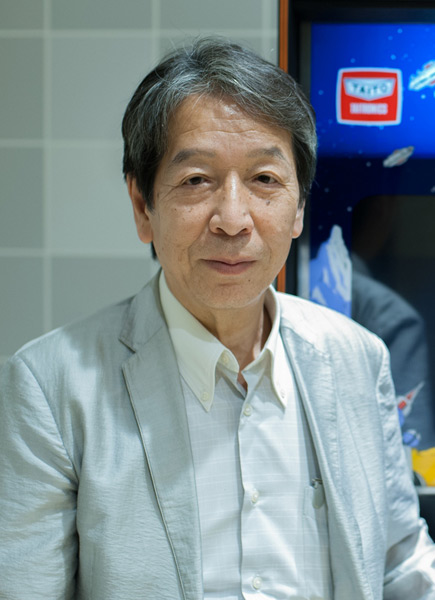
Photo credits: ©Guillaume Vieu
The MO5.COM association has the great pleasure of announcing that Tomohiro Nishikado, creator of Space Invaders, has just joined the association as an honorary member.
He considers our initiative necessary and welcome, and offers us his support by agreeing to become an honorary member of the association. There is no doubt that the support of such a personality from the world of video games will help us to make ourselves known and develop.
Born on March 31, 1944, Tomohiro Nishikado joined Pacific Kōgyō, a subsidiary of Taito, in 1968, but it was in 1970 that he moved to the development of electromechanical games with Sky Fighter, followed by Sky Fighter II and Border Line. Two years later, it was of course the discovery of Atari's famous Pong (1972), which he dissected in detail, which allowed him to design the very first Japanese video game: Soccer (1973). It will be followed by Basketball (1974) and also the same year by the racing game Speed Race, in a way the remake of an electromechanical terminal that Nishikado loved when he was young, Mini Drive (1959), by Kasco. But it was especially with Space Invaders (1978) that he shook up the video game industry. Born from the idea of surpassing Breakout (1976) this time, it benefited from the deepening of its knowledge in computer science and in particular from this brand new component, the microprocessor. He thus makes his own development tools and creates a variation of the brick breaker where the “racket” shoots balls straight and in which it is the “bricks” that move! The success was such that it became a real social phenomenon in Japan and elsewhere in the world for more than a year. After Space Invaders Part Two the following year came Lunar Rescue (1979), Balloon Bomber and Space Cyclone (1980). In 1981, Nishikado then joined the brand new “Future Products Division” where he designed all kinds of robots and prepaid cards until 1988, when he took charge of the console games division. Tired of this purely administrative position, he left Taito in 1996 but remained a consultant for the company. He thus founded his own studio, Dreams, with which he produced games for the publisher such as Pop'n Pop (1998) or Chase HQ: Secret Police (1999), but which also specialized in video game debugging. Nishikado retired in 2010, at the age of 65, but this allowed him to return to pure creation and to realize personal projects of electromechanical games like Magic Bell or Magic Hat, as well as a miniature version of the Sky Fighter terminal. In 2017, he published his first biography with Omaké Books.
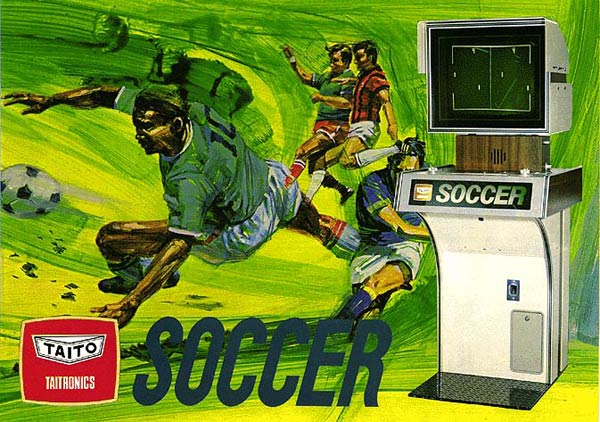
Soccer (arcade, 1973)
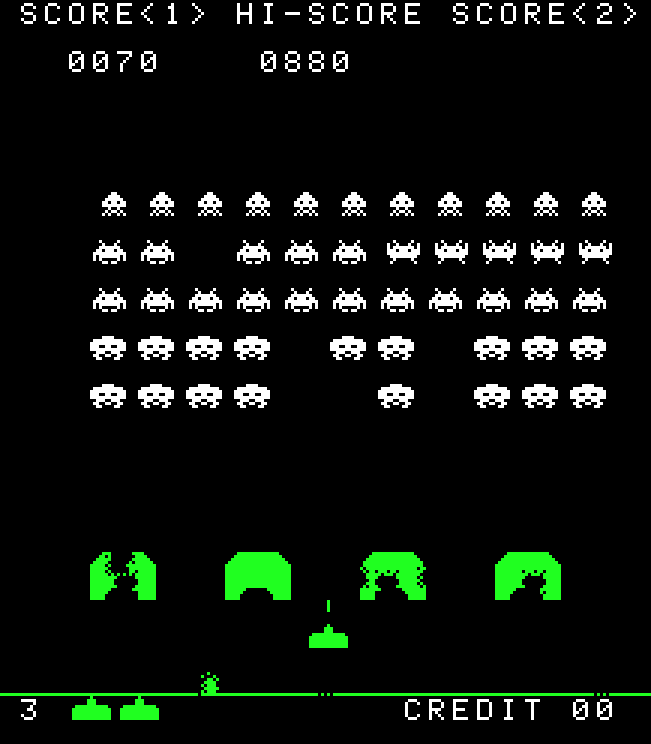
Space Invaders (arcade, 1978)
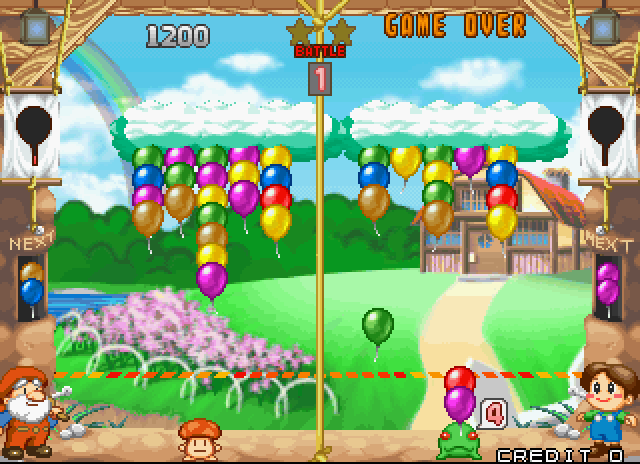
Pop’n Pop (arcade, 1998)
And you, why not become a member of MO5.COM too?